
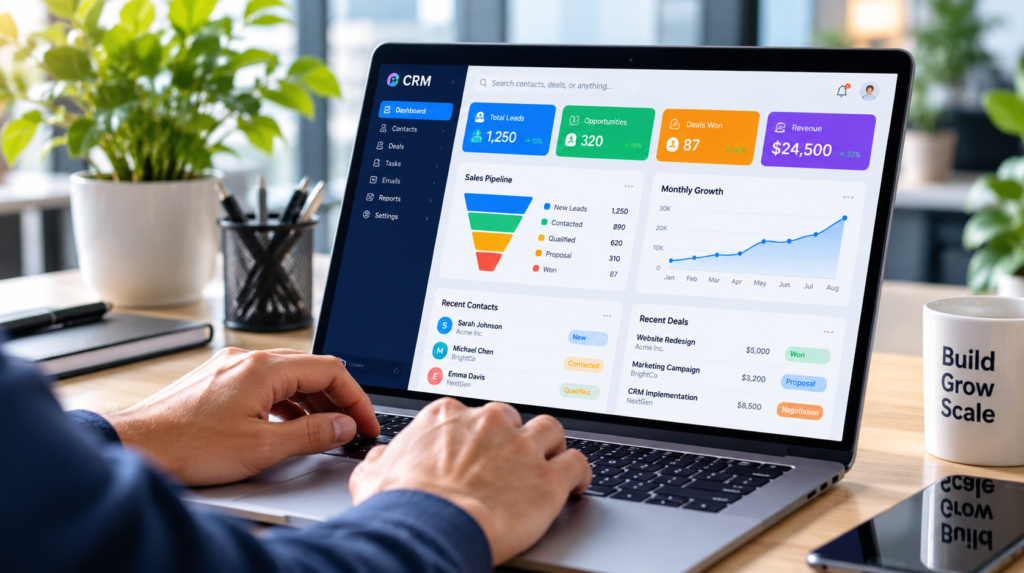
Why Your Startup Needs a CRM in 2026
Choosing the right customer relationship management (CRM) software is one of the most important technology decisions a growing startup can make.
In the early stages, managing leads through spreadsheets, email inboxes, and scattered notes might seem manageable. But as your customer base grows, missed follow-ups and disconnected information can quickly become expensive problems.
A good CRM helps startups organize contacts, manage sales opportunities, track conversations, and build more consistent customer relationships.
In this 2026 guide, we compare five CRM platforms worth considering, highlighting their strengths, limitations, pricing, and ideal use cases.
Quick Comparison: Best CRM Software for Startups
| CRM Platform | Best For | Entry Pricing |
|---|---|---|
| HubSpot CRM | Startups looking for a free starting point | Free plan available |
| Pipedrive | Sales-focused startup teams | From $14/user/month, annually |
| Zoho CRM | Budget-conscious growing businesses | From $14/user/month, annually |
| Freshsales | Teams interested in integrated sales communication | Check current plans |
| monday CRM | Teams needing customizable sales workflows | From $12/seat/month, annually |
Prices are in USD where stated, may depend on billing terms and promotions, and should be confirmed on official provider websites.
1. HubSpot CRM — Best for Startups Getting Started
HubSpot CRM is a strong option for early-stage companies that want to organize their sales activities without immediately committing to expensive software.
Its free tools provide a practical starting point for managing customer information, monitoring opportunities, and keeping sales activity organized.
Key Features
- Contact and company management
- Visual sales pipelines
- Email templates and tracking tools
- Meeting scheduling
- Reporting dashboards
- Integrations with other business applications
Advantages
- Free entry-level tools
- Broad ecosystem of sales and marketing products
- Suitable for companies planning to expand their operations
- Useful integrations
Limitations
- Advanced automation requires paid subscriptions
- Costs can increase as teams upgrade
- Some features have usage restrictions
Pricing
HubSpot offers free CRM tools for up to two users. Paid Sales Hub plans provide additional capabilities and higher limits.
Our Assessment
HubSpot is worth considering if your startup needs a basic CRM today but expects to introduce more sophisticated sales and marketing processes later.
Best for: Founders and small teams seeking a free starting point.
2. Pipedrive — Best for Sales Pipeline Management
Pipedrive focuses on helping sales teams visualize opportunities and move deals through clearly defined stages.
For startups whose primary objective is closing more sales, its pipeline-centered approach can be particularly appealing.
Key Features
- Visual deal pipelines
- Lead and contact management
- Sales activity tracking
- Reporting and forecasting tools
- Email integration and automation on eligible plans
- Third-party integrations
Advantages
- Clear sales-focused interface
- Strong pipeline visibility
- Useful activity management
- Suitable for structured sales processes
Limitations
- No permanent free plan
- Some automation features require higher plans
- Optional add-ons can increase total costs
Pricing
Pipedrive Lite starts at $14 per seat per month with annual billing. A 14-day free trial is available.
Our Assessment
Pipedrive is a compelling choice for startups with a dedicated sales process that need to track deals and follow-ups consistently.
Best for: B2B startups and sales-driven teams.
3. Zoho CRM — Best for Budget-Conscious Growing Startups
Zoho CRM offers a broad set of customer management capabilities, making it attractive to startups that want flexibility while controlling software spending.
It supports lead management, sales workflows, reporting, and integrations across the Zoho ecosystem.
Key Features
- Lead and contact management
- Multiple sales pipelines on eligible plans
- Workflow automation
- Sales forecasting
- Custom fields and modules
- Integrations with business applications
Advantages
- Competitive entry-level pricing
- Extensive customization options
- Broad business software ecosystem
- Room to expand into more advanced workflows
Limitations
- Configuration may take time
- Advanced features vary by subscription
- The number of settings may feel overwhelming for beginners
Pricing
Zoho CRM Standard is advertised from $14 per user per month with annual billing.
Our Assessment
Zoho CRM is worth considering for growing startups that want a customizable platform without immediately paying for a premium CRM subscription.
Best for: Cost-conscious startups needing flexibility.
4. Freshsales — Best for Integrated Sales Communication
Freshsales, part of the Freshworks product family, is designed to help sales teams manage leads, customer interactions, and sales pipelines.
It is particularly relevant for startups that want customer information and sales communication organized within the same environment.
Key Features
- Contact and account management
- Sales pipeline management
- Lead engagement tools
- Email and communication capabilities
- Sales automation on eligible plans
- Reporting tools
Advantages
- Focus on sales productivity
- Centralized customer information
- Communication-oriented features
- Options for growing sales teams
Limitations
- Feature availability varies by plan
- Advanced functionality can increase costs
- Teams should confirm communication features before purchasing
Our Assessment
Freshsales deserves consideration when a startup needs CRM functionality closely connected to everyday sales communication.
Best for: Small sales teams managing frequent customer interactions.
5. monday CRM — Best for Customizable Sales Workflows
monday CRM combines customer relationship management with a flexible, visual approach to organizing work.
It can be attractive to startups that want to adapt their CRM to their own processes rather than follow a rigid sales structure.
Key Features
- Customizable sales boards
- Contact and deal tracking
- Workflow automation on eligible plans
- Dashboards and reporting
- Team collaboration
- Integrations with external tools
Advantages
- Flexible workflow customization
- Visual organization
- Useful for collaborative teams
- Can accommodate different sales processes
Limitations
- Minimum seat requirements affect pricing
- Advanced features require higher-tier plans
- Initial customization may require planning
Pricing
monday CRM Basic starts at $12 per seat per month with annual billing. Plans start from three users, so startups should consider the minimum total subscription cost.
Our Assessment
monday CRM is a good option to evaluate if your startup wants a flexible workspace that can be tailored to its sales process.
Best for: Collaborative startups with customizable workflows.
How to Choose the Right CRM for Your Startup
The best CRM is not necessarily the platform with the most features. It is the one that fits your current business needs and can support your next stage of growth.
1. Start With Your Sales Process
Identify how your team captures leads, follows up with prospects, and closes deals. Choose software that supports those steps without adding unnecessary complexity.
2. Consider the Total Cost
Look beyond the advertised starting price. Evaluate seat minimums, billing commitments, automation upgrades, and optional add-ons.
3. Prioritize Ease of Use
A CRM delivers limited value if your team rarely uses it. Consider the interface, onboarding requirements, and everyday workflow.
4. Review Integrations
Check whether the CRM connects with the email, calendar, marketing, and customer support tools your startup already uses.
5. Plan for Growth
Think about whether the platform can accommodate more users, larger contact databases, and increasingly complex sales processes.
Free vs. Paid CRM: Which Is Better for Startups?
A free CRM can be sufficient for a startup with a small team, a limited budget, and straightforward customer management needs.
Paid software becomes more attractive when a business needs advanced automation, sophisticated reporting, additional integrations, or specialized sales workflows.
Before upgrading, determine which specific limitation is affecting your productivity. Paying for extra features that your team does not use rarely produces meaningful value.
Final Verdict: Which CRM Should You Choose in 2026?
Each platform serves a different type of startup.
Choose HubSpot CRM if you want a free starting point and access to a broad software ecosystem.
Choose Pipedrive if your priority is managing sales opportunities and keeping your pipeline organized.
Choose Zoho CRM if affordability and customization are especially important.
Consider Freshsales if your sales process relies heavily on managing customer communication.
Consider monday CRM if your team values visual collaboration and flexible workflows.
Our recommendation is to shortlist two or three platforms, compare their current plans, and evaluate them against your actual sales process before committing to a subscription.
Frequently Asked Questions
What is the best CRM for a startup in 2026?
There is no single best CRM for every startup. HubSpot is a practical free starting point, Pipedrive focuses on sales pipelines, and Zoho CRM offers extensive customization at competitive entry-level pricing.
Can a startup use a CRM for free?
Yes. Some CRM providers offer free plans with restrictions on users or functionality. HubSpot, for example, provides free tools for up to two users.
When should a startup start using CRM software?
A startup should consider CRM software when managing contacts, leads, and follow-ups through spreadsheets or email becomes difficult or unreliable.
Is CRM software useful for a one-person business?
Yes. Solo founders can benefit from centralized contact records, follow-up reminders, and a clearer view of potential sales.
What should startups compare before buying CRM software?
Focus on ease of use, pricing, user limits, sales pipeline capabilities, integrations, reporting, and the cost of upgrading as your business grows.
Editorial note: This guide is based on publicly available product information and feature comparisons, not independent hands-on testing. Pricing and features may change. Verify current details with each provider before purchasing.
Last updated: October 2026.
Pingback: Best Email Marketing Software in 2026: Top 5 Compared